

Introduction
Choosing between hardneck vs softneck garlic starts with your climate, cooking habits, and storage needs. Both can produce a rewarding harvest, but their stalks, clove patterns, and growing preferences differ.
Hardneck garlic generally suits regions with cold winters. Its bulbs often contain one ring of larger cloves around a firm central stalk. These cloves are usually easy to peel, making them convenient for everyday cooking.
Softneck garlic often performs well in warmer climates and generally stores longer after proper curing. Its bulbs usually contain several layers of cloves, with smaller cloves toward the center. The flexible dried stems can also be braided.
These are general patterns, not fixed rules. Individual varieties differ in flavor, size, and climate tolerance. The difference between hardneck and softneck garlic can help guide your choice, but local growing advice remains important when comparing the two types of garlic.
Hardneck Garlic vs Softneck Garlic at a Glance
| Feature | Hardneck | Softneck |
|---|---|---|
| Central stalk | Firm stalk through the bulb | Usually lacks a rigid central stalk |
| Clove arrangement | Often one ring of relatively large cloves | Often several layers with mixed clove sizes |
| Scapes | Usually produces scapes | Usually does not produce scapes |
| Climate preference | Generally better adapted to colder regions | Generally best for milder winters and warmer regions. |
| Storage | Usually shorter | Typically stores longer than hardneck types when both are properly cured; actual duration varies by variety and conditions. |
| Braiding | Stiff stalk makes braiding difficult | Flexible dried stems are suitable for braiding |
| Flavor | Bold, complex, “gourmet” style flavor. | Often milder, with great versatility for everyday cooking. |
Compare hardneck seed garlic and softneck seed garlic, then choose varieties suited to your region.
- Choose hardneck garlic if you want scapes, fewer but larger cloves, and rich flavor, especially in colder regions.
- Choose softneck garlic if you want many cloves per bulb, typically longer storage than hardneck types, and flexible stems for braids.
How to Identify Hardneck and Softneck Garlic
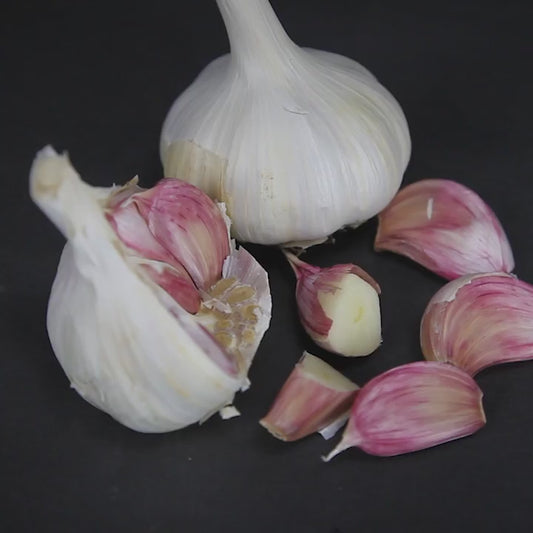
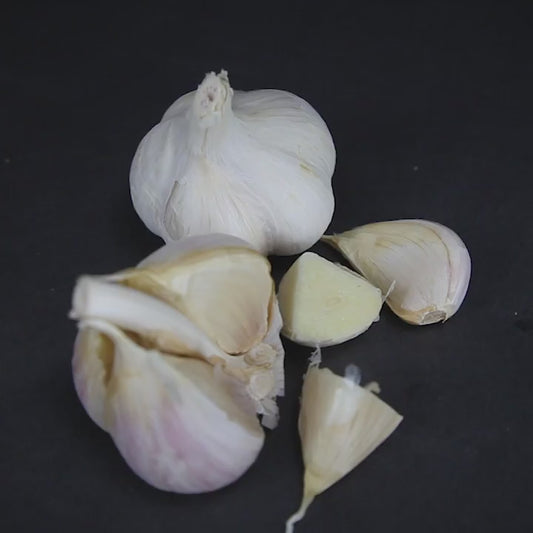
What does hardneck garlic look like? If you have difficulty distinguishing hardneck from softneck garlic, look at the center of the bulb and the way its cloves are arranged. Hardneck garlic usually has a firm central stalk surrounded by a single ring of larger cloves. Softneck garlic generally lacks a rigid central stalk and has several layers of cloves, with smaller cloves often found toward the center.
The difference between soft and hard neck garlic becomes clearer when you separate the bulb into individual cloves. Both types can have white or purple outer wrappers, so color alone is not a reliable way to identify them. If you are buying garlic bulbs for planting, check the variety name and the supplier’s description to confirm which type you are purchasing

Choose for Your Climate
Deciding on hardneck or softneck garlic requires more than a hardiness-zone label. Winter cold, spring temperatures, and day length all influence bulbing.
Hardneck varieties are often reliable in a cold climate. Compare Siberian and German Extra Hardy when selecting hardneck garlic for planting.
Growing softneck garlic often makes sense in milder regions. Options include California Early White, California Late White, and Inchelium Red. Local performance still matters.
Whether you choose softneck or hardneck garlic, start with a small order. Ask nearby growers which cultivars have performed well over several seasons. A named cultivar gives you a clearer basis for comparison than a bulb labeled only by color or country of origin. Keep labels with each row and stored batch so useful observations remain linked to the right plant next season.
Use the garlic selector alongside our climate-based selection tips.
Explore Groups and Flavor
Common types of hardneck garlic include Porcelain, Rocambole, and Purple Stripe. Spanish Roja belongs to Rocambole. Chesnok Red is a Purple Stripe, while Purple Glazer belongs to the Glazed Purple Stripe group.
Among hardneck garlic varieties, Music is a Porcelain often valued for large cloves. Softneck garlic varieties include Artichoke and Silverskin cultivars. Early Purple Italian is a softneck despite its colorful name.
Different types of garlic can taste sharp raw and mellow after cooking. Neither group is always more strong flavored. Explore garlic flavors, then compare small batches prepared the same way.
Planting and Growing Basics
Garlic is usually planted in the fall, allowing roots to form before winter. Follow regional timing rather than one national planting date.
Plant each healthy garlic clove pointed end upward in sunny, well-drained soil. Minnesota Extension places the clove base two to three inches deep; local depth recommendations may differ.
Buy seed garlic from a reputable supplier. The term garlic seed usually refers to planting cloves, not botanical seeds.
Our garlic growing guide covers seasonal care. The planting overview, steps for large bulbs, and winter care tips provide more detail.
Remove tender hardneck scapes without removing leaves. This can direct more growth toward the bulb, and the scapes are edible.

Harvest, Cure, and Store
Check garlic bulbs when lower leaves brown but several upper leaves remain green. Dig a sample: the cloves should be well formed and the wrappers intact. Waiting until every leaf dies can leave bulbs poorly protected.
Lift carefully, avoid bruising, and cure in a dry, shaded place with airflow. Allow several weeks for necks and wrappers to dry. Our harvest guide explains the process.
Store cured bulbs somewhere dry with ventilation. Use damaged bulbs first. For garlic types grown under similar conditions, softnecks usually keep longer, but cultivar and storage conditions change the outcome.
Conclusion
The difference between softneck and hardneck garlic helps guide selection, but local results are the best test. If you're wondering how many types of garlic is there, true garlic is generally divided into two main categories: hardneck and softneck, each with numerous cultivars.
Grow a small trial of suitable varieties and record harvest quality, flavor, and storage life. You can also explore elephant garlic, a leek relative rather than true garlic, if you want to grow larger, milder-flavored cloves. Our garlic resource center brings those planning tools together.
For a practical kitchen supply, use shorter-storing bulbs first and save sound, longer-storing bulbs for later meals. Check stored harvests regularly and promptly remove any that soften or decay. Your ideal mix may include both hardneck and softneck garlic, giving you different cooking options without relying on a single cultivar.







28 comments
Ann, elephant garlic will grow in your zone. It is not actually a true garlic, but rather a member of the leek family. Softneck varieties do well in warmer zones and if you want to grow hardneck garlics, you will want to put it in the refrigerator for a couple of weeks before you plant, since it requires more chill than softnecks.
Hi Grow Organic – I am interested in growing garlic in the Fall. I live in Houston, TX (Zone 9a). What type of garlic do you recommend? Does elephant garlic grow well in 9a? Thanks.
Christine, you can grow hardneck or softneck in zone 8a. I live in zone 9a and we get cold enough to grow hardnecks. I prefer hardnecks over softnecks (easier to peel and more robust flavor), so I really think you should grow for the flavor you want, if you need long storage then softnecks or elephant garlic are a better choice.
Should I be growing soft neck garlic in zone 8a? Thank you.
Janice, In your zone you can grow hardneck garlic with no problem. Softnecks should grow there as well, however, they are more suited to warmer winter zones. I would look at the hardnecks and choose the one that best suits your tastes…mild or spicy.